
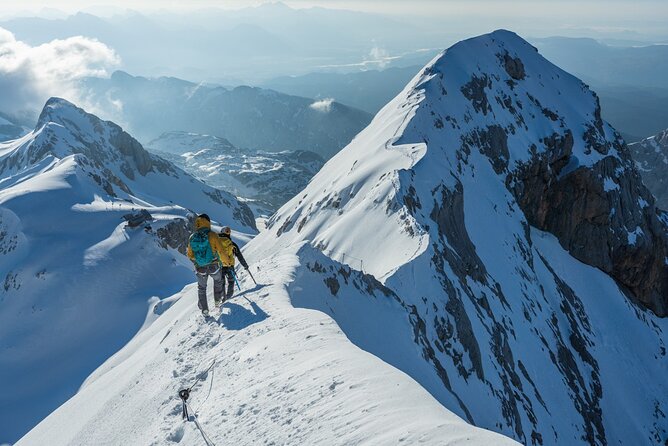
REVIEW · TRIGLAV NATIONAL PARK & THE JULIAN ALPS
Triglav winter edition
Cold air. Big heights. Small group.
The Winter Edition of Triglav from Bled turns a serious goal into a well-run, practical mountain day, with an IFMGA mountain guide leading you step by step. I like that the program is built around real winter mechanics, snow travel, and sensible pacing, not just a “go to the top” promise. I also like the small-group setup, with a maximum of 2 travelers, so you get attention when conditions change. One thing to consider up front: this is altitude work in winter, and the guide will do a physical and psychological check to confirm you can handle it.
If you want the experience of Julian Alps winter travel, with a night at Triglavski dom na Kredarici and a summit push the next morning, this tour is one of the more focused ways to do it from Bled. The program is short, about 2 days, and the days are long, with weather and snow conditions shaping timing. If you’re hoping for a relaxed stroll and guaranteed summit in all weather, you’ll want to adjust expectations.
In This Review
- Key highlights worth knowing before you go
- Why winter Triglav from Bled feels different than a summer climb
- The 2-day plan, step by step, and what each moment really means
- Day 1: Getting set for snow travel, then the long climb to Kredarica
- Day 1 nights at Triglavski dom na Kredarici: basic comfort, big altitude focus
- Day 2: Summit of Triglav, then down to Krma Valley by late afternoon
- What you get for the $674.30 per person, and where your extra costs likely are
- Guides and safety: what to watch for in a winter summit plan
- Gear and fitness: how “moderate physical fitness” works here
- What “transport from Bled” really buys you on a winter weekend
- The hut experience: limited utilities, warm food, and a realistic night
- Small-group pacing, photo stops, and the human side of the climb
- Who this is for, and who should look elsewhere
- Should you book the Triglav Winter Edition from Bled?
- FAQ
- Where is the tour starting and ending?
- What time does it start?
- How long is the tour?
- Is this tour offered in English?
- What is included in the tour price?
- What is not included?
- Do I need special equipment for winter conditions?
- How physically demanding is it?
- How many people are in the group?
Key highlights worth knowing before you go
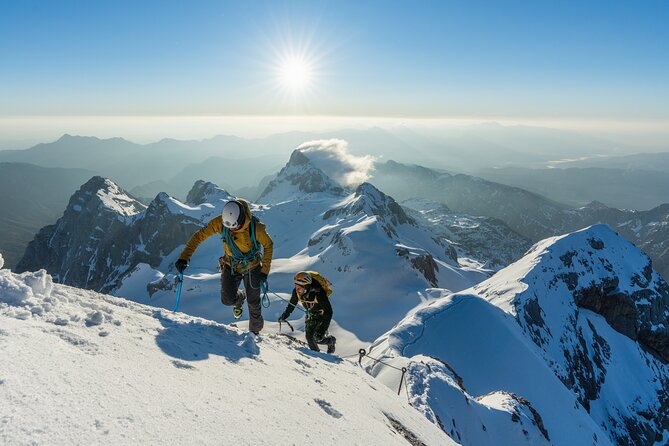
- Small group size (max 2 travelers), which matters when snow, pace, and gear adjustments happen fast
- Day 1 hike to Triglavski dom na Kredarici (highest hut in the Julian Alps), timed around winter conditions
- Essential winter mountaineering equipment included, plus snowshoes or crampons provided by the guide
- Night at the hut in a winter-only setting, with limited utilities and basic warmth
- Photo time built in, including a break on Triglav’s top for views and pictures
- Car transport from the Bled area, so you can focus on the climb instead of logistics
Higher up, into Triglav country
- Triglav National Park : The Original Emerald River Adventure★ 5.0 · 270 reviews
- 7 Alpine Wonders- Day Tour Bled, Soca valley, Slovenia★ 5.0 · 136 reviews
- Day Trip in Triglav National Park from Bled★ 5.0 · 130 reviews
- Canyoning Bled Slovenia Triglav National Park Tour with Photos★ 5.0 · 125 reviews
Why winter Triglav from Bled feels different than a summer climb
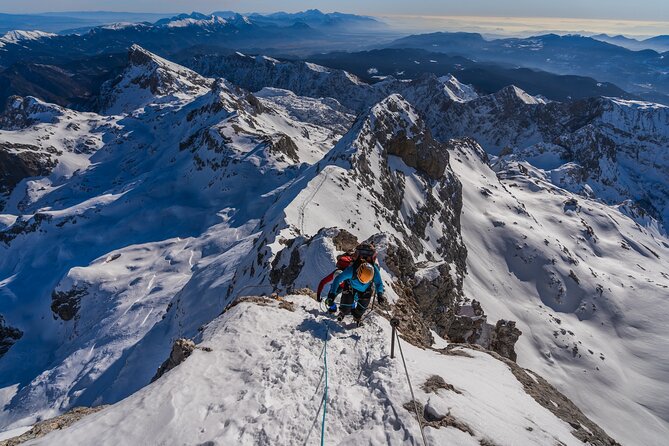
Triglav is Slovenia’s highest mountain, but winter turns the whole game. You’re not just hiking, you’re traveling over snow where traction, timing, and route choice can make the difference between smooth progress and constant thrashing. That’s why I like this tour’s structure: it’s clearly designed around winter movement and safety, from gear planning to the summit push.
The tour is based in the Bled area, and it uses a simple rhythm. You meet in Bled at 8:00am, then you’re transported by car to the starting point in the mountains. From there, you hike to the highest hut open in winter, stay the night, then go for the summit the next morning and return by late afternoon. It’s compact, but it’s not rushed for the sake of rushing.
A bonus for many people is the “small goal, big payback” feeling. Day 1 gets you up to Triglavski dom na Kredarici, which is a major milestone on the winter route system in the Julian Alps. Day 2 is shorter in total hours, but it includes the summit itself, which keeps it intense and memorable.
The 2-day plan, step by step, and what each moment really means
Day 1: Getting set for snow travel, then the long climb to Kredarica
Your day begins with Altitude Activities at the meeting point in Bled. That first part is only about 10 minutes and lists as free admission. In practice, that short start matters because winter climbing rewards smooth organization. You get the day rolling with the right mindset and the guide can confirm you’re lined up for the conditions.
Then you drive toward the Krma valley, which becomes your hike starting point. From Krma, you’re looking at roughly 6 hours hiking to reach Triglavski dom na Kredarici, the highest hut in the Julian Alps. The timing depends a lot on snow depth and weather, and that’s normal in winter. What’s not normal is trying to force a pace that ignores snow travel reality. This tour is honest about the fact that conditions drive the schedule.
Equipment is part of this day’s “what makes it work.” You’ll have essential winter mountaineering equipment included. In winter, you typically need traction and efficient snow movement, and the guide provides the tools you need, such as snowshoes or crampons, depending on the conditions. That reduces guesswork for you and keeps the day focused on hiking skills and safe movement.
The final approach into the hut is also a psychological switch. Day 1 isn’t about one summit photo. It’s about reaching a high winter base where the next day begins. Triglavski dom na Kredarici is open in winter largely because it plays a role in weather monitoring, so it’s one of the few places that makes winter routes possible.
Once you arrive, you accommodate there for the night. Utilities are limited, but you can get a warm meal and drink. Just keep expectations practical: the hut is functional, not hotel-level.
Day 1 nights at Triglavski dom na Kredarici: basic comfort, big altitude focus
Staying in the hut is one of the most valuable parts of this plan. You’re sleeping at altitude in winter, so the goal is not luxury, it’s recovery and safety. The tour notes that accommodation in the mountain hut is not included, so you’ll want to plan your budget accordingly even though the overnight is built into the itinerary.
Also, food and drinks are not included. That said, the hut offers the chance to get a warm meal and drink on-site, which is a common lifeline after a long day in cold air. The key is that you should pack money and energy planning for basic sustenance rather than assume meals are part of your price.
In winter, a night like this also changes your summit mindset. You’re not climbing from the valley in one long push. You’re already at a high point, and the hut becomes your staging area. If you’re someone who likes a clear overnight plan with a defined “tomorrow morning” objective, this format tends to work well.
Cold air, much better light
Day 2: Summit of Triglav, then down to Krma Valley by late afternoon
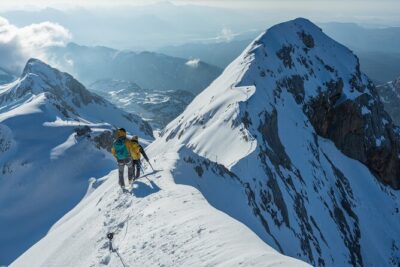
After breakfast, you prepare your equipment and start the climb to the top of Triglav. The ascent is about 2 hours, depending on the conditions. In winter, that can feel both short and intense. Short because the hut is already high, intense because snow traction, route choice, and breath control matter on the way up.
At the summit, there’s a short break for photos and to enjoy the views. Then you descend back to Krma Valley. Day 2 is expected to return you to Bled in the late afternoon, and the total day is about 4 hours of activity, again depending on conditions.
This is where the “winter mechanics” really pay off. When the route is efficient and traction is correct, you move with confidence. When conditions are rough, the guide can slow the pace, switch route segments, or adjust equipment use. That’s why the IFMGA credential and hands-on winter experience are so important for this specific tour design.
What you get for the $674.30 per person, and where your extra costs likely are
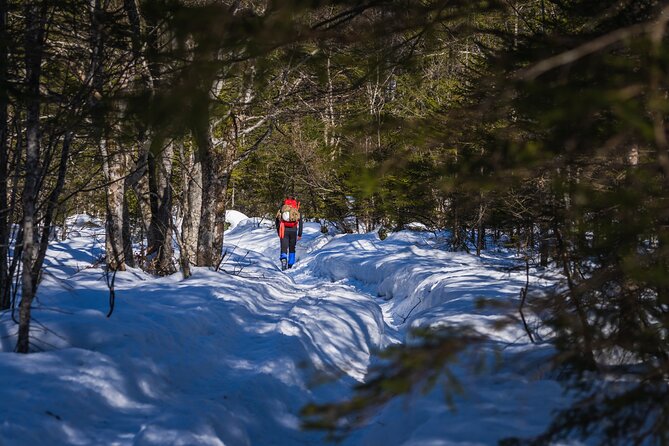
At $674.30 per person, you’re paying for a real winter guide-led operation, with gear and transport built in. Here’s the value breakdown based on what’s included:
Included:
- Essential winter mountaineering equipment
- A certificated IFMGA mountain guide
- Transport by car from the Bled area to the starting point and back
- Photos
That combination is the big deal. Winter climbing can become expensive fast if you have to rent all the gear, figure out transport, and hire a guide piecemeal. Here, those essentials are bundled so you can budget without surprises about the “how do we actually do this” pieces.
Not included:
- Food and drinks
- Accommodation in the mountain hut
So you should plan to spend extra for the hut night and meals. The good news is the hut setting is built into the experience. The bad news is you can’t count on the main meal costs being covered by your tour price.
If you’re comparing value, I’d also weigh the group size. With a maximum of 2 travelers, your guide attention is more concentrated than on larger group hikes. That can reduce stress in winter, where small decisions matter.
Guides and safety: what to watch for in a winter summit plan
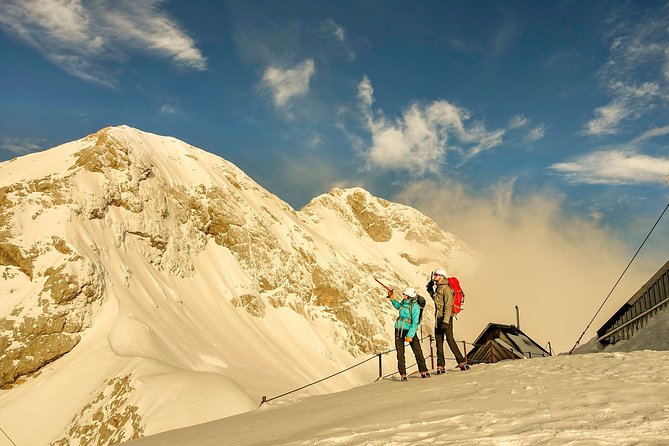
The tour runs with an IFMGA mountain guide, which is exactly the kind of qualification you want for winter conditions. You’re not just learning a route. You’re relying on someone who can read snow, weather, and terrain and make calls that keep you moving safely.
From the way the experience is described, safety is treated as a constant. The guide provides and manages winter equipment needs like snowshoes or crampons, and the pace is adjusted based on conditions. That matters because the difference between calm progress and panic is often traction, not effort.
You’ll also notice something else baked into the program: the guide does a physical and psychological assessment before the trip. That’s a good sign. Winter summits are not only a body challenge, they’re a decision-making challenge under cold stress. If the guide says you’re not ready, that’s the program protecting you, not rejecting you.
Gear and fitness: how “moderate physical fitness” works here
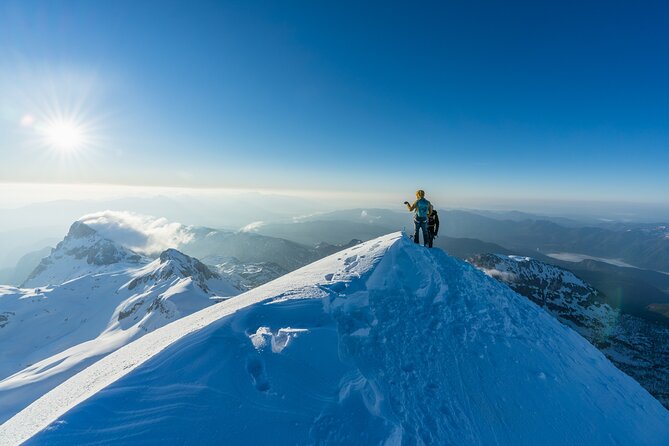
The tour says it’s suitable for travelers with moderate physical fitness, but it also warns that you have to reach high altitude in just one day on Day 1. That combination is common in winter. “Moderate” means you don’t need to be a mountaineering athlete, but it also means you should be honest about your endurance.
Expect the program to be demanding because:
- Day 1 includes around 6 hours of hiking to a high hut
- Winter snow travel slows everything down
- Day 2 includes a summit climb of about 2 hours plus descent to Krma Valley
If you’re mentally flexible and you can follow instructions quickly, you’ll likely feel more in control. If you’re someone who gets discouraged when plans change due to weather, you’ll want to rehearse patience ahead of time.
What “transport from Bled” really buys you on a winter weekend
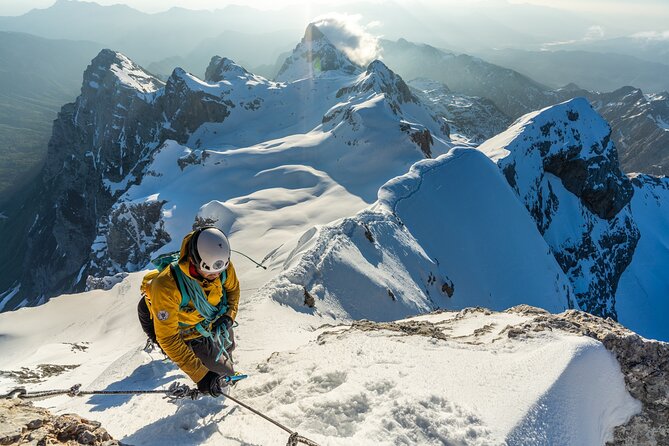
Getting to the mountains matters more in winter than in summer. Cold mornings, snowy roads, and time limits can turn a fun day into a stressful one. This tour includes car transport from the Bled area to the starting point and back, so you’re not piecing together rides while also managing gear.
Starting from Bled, near public transportation, also makes the experience easier to fit into a Slovenian itinerary. You’re not stuck trying to coordinate remote transfers, and you can keep the day focused on the climb rather than the logistics.
The hut experience: limited utilities, warm food, and a realistic night
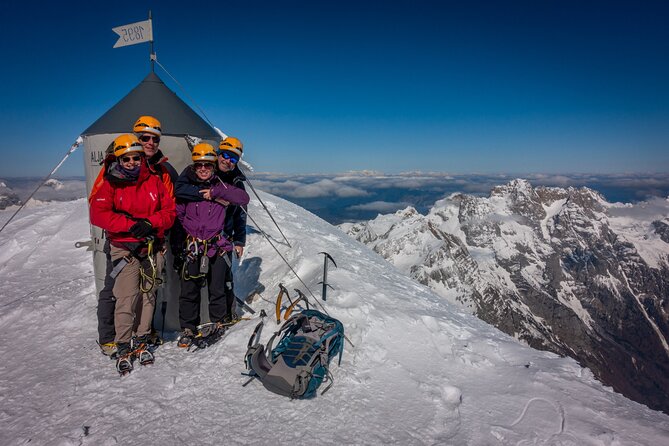
Triglavski dom na Kredarici is described as having not many utilities, and it’s open in winter due to weather monitoring. That’s exactly what you should expect from a winter mountain hut. You’re not going there to recharge like you would in a modern lodge. You’re going there to get warm enough, eat something, and reset your body for the next day.
You can get a warm meal and drink there, but remember that food and drinks are not included in the tour price. So if you’re budgeting, plan for the hut night as a real cost, not a token add-on.
Staying at the hut also changes the feel of the summit day. Instead of waking up far below and spending the entire morning climbing just to reach the “real” route, you wake up close enough that the summit push becomes the centerpiece.
Small-group pacing, photo stops, and the human side of the climb
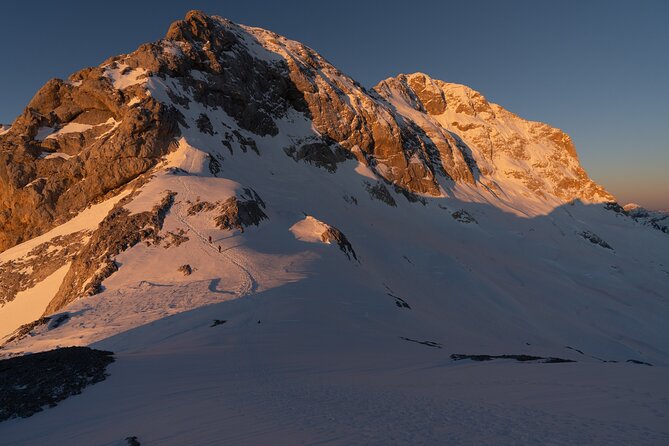
The tour includes photos, and the plan explicitly has time for photography. That helps you capture the moment without feeling like the guide is constantly rushing you between technical steps.
Several climbs associated with this operation highlight guides who maintain pacing, take time for photography, and keep the group calm. Names that come up are Matevž for guiding, and in one sunrise-focused experience, Peter joined for the top ascent moment. Not every trip will have the exact same support team, but it’s a helpful clue that the guides care about more than just technical movement. They also care about the experience quality you’ll remember later.
Who this is for, and who should look elsewhere
This is a strong fit if:
- You want a true winter mountain experience, not a mild walk
- You’re okay with cold, traction, and changing conditions
- You like small groups, clear guiding, and a defined overnight plan
- You’re training for larger winter goals and want the process done right
You might want to skip this one if:
- You want guaranteed summit results no matter the weather
- You’re not willing to be assessed for readiness
- You get frustrated with conditions affecting timing (snow and weather will change things)
Should you book the Triglav Winter Edition from Bled?
I think you should book if your goal is a focused, guided winter climb with the right structure: transport from Bled, a long day to Triglavski dom na Kredarici, a basic hut night, then a summit push to Triglav with equipment and guide support handled for you. The value comes from bundling the hard parts: gear, qualified guidance, and winter logistics, plus photos.
But be honest with yourself about two things. First, Day 1 is a serious altitude hike in one go, not a gentle acclimatization tour. Second, you’ll need extra budget for the hut night and your meals. If you can handle those realities, this is exactly the kind of short winter adventure that can stick with you for years.
FAQ
Where is the tour starting and ending?
The experience starts in Bled, Bled, Upper Carniola Region and ends back at the meeting point in Bled.
What time does it start?
It starts at 8:00am.
How long is the tour?
The duration is 2 days (approx.).
Is this tour offered in English?
Yes, it is offered in English.
What is included in the tour price?
Included items are essential winter mountaineering equipment, a certificated IFMGA mountain guide, car transport from the Bled area to the starting point and back, and photos.
What is not included?
Food and drinks are not included, and accommodation in the mountain hut is not included.
Do I need special equipment for winter conditions?
Essential winter mountaineering equipment is included. The guide also provides snow travel support such as snowshoes or crampons depending on conditions.
How physically demanding is it?
It’s described as suitable for travelers with moderate physical fitness, but you must reach high altitude in one day, and you will be physically and psychologically assessed by the guide before the trip.
How many people are in the group?
The tour has a maximum of 2 travelers.
More Slovenian Winter Trips
Every Slovenia Tour We Have Reviewed
Deeper Into the Julian Alps
Recently added to our Slovenia write-ups
- Winter Fairytale – Triglav National Park Half Day Trip
★ 4.5 · 3 reviews - Unique Vertical Camping
★ 5.0 · 3 reviews - Postojna Cave and Predjama Castle Trip including entry tickets
★ 3.5 · 3 reviews - From Bled: Crystal River Hike
★ 5.0 · 3 reviews - Exclusive – Private Bled Lake Canyoning Adventure
★ 5.0 · 3 reviews - Private Bohinj & Vogel Tour from Bled
★ 4.5 · 3 reviews
Triglav National Park & the Julian Alps, side by side.
 ★ 4.9From Ljubljana: Guided Day Tour to Soča and Kranjska GoraFrom $115584 reviews
 ★ 5.0Triglav National Park : The Original Emerald River AdventureFrom $187270 reviews
 ★ 5.0Full-Day Triglav National Park Tour from LjubljanaFrom $181166 reviews
 ★ 5.07 Alpine Wonders- Day Tour Bled, Soca valley, SloveniaFrom $193136 reviews
 ★ 5.0Day Trip in Triglav National Park from BledFrom $157130 reviews
 ★ 5.0Canyoning Bled Slovenia Triglav National Park Tour with PhotosFrom $126125 reviews
 ★ 5.0From Bled: Triglav National Park TourFrom $168110 reviews
 ★ 4.9Triglav National Park Tour from BledFrom $152107 reviews
Also filed under