
REVIEW · LJUBLJANA TOURS & DAY TRIPS
Barista Skills Foundation Course in Ljubljana
Coffee gets technical fast.
In Ljubljana, this 7-hour Barista Skills Foundation Course turns espresso from a mystery into a set of repeatable skills, with hands-on practice on actual professional equipment and guidance from Specialty Kava Slovenia. You also learn how to judge what you taste, not just how to follow a recipe.
I like that the day focuses on flavor evaluation, so you learn why coffee tastes the way it does, and what changes when you adjust your brewing. I also like the practical training angle: you make classic espresso-based drinks, then work on latte art with real technique, not just watching someone pour.
One consideration is that it is a full day, about 7 hours, and lunch is not included, so you will want to plan your timing around food (snacks and bottled water are included).
In This Review
- Key Points Worth Knowing Before You Go
- Why This Ljubljana Course Is More Than Espresso 101
- Start at Dunajska c. 61, Then Settle Into a 10:00 am Skill Day
- Espresso-Based Drinks, But With Flavor Evaluation Built In
- Equipment Basics and Maintenance Mindset That Saves You Later
- Latte Art Practice: Pouring With Control, Not Just Hope
- Coffee Sourcing and Dialing In: Learn the Adjustments That Matter
- A 7-Hour Training Day That Feels Like Progress, Not Waiting
- What You Get During the Course, and What You Should Plan For
- English Instruction and Adult Workshop Focus
- Price and Value: Is $355.04 Fair for 7 Hours?
- Who Should Book This Course, and Who Might Skip It
- Should You Book This Barista Skills Foundation Course in Ljubljana?
- FAQ
- How long is the Barista Skills Foundation Course in Ljubljana?
- What time does the course start?
- Where does the experience meet and end?
- Is the course offered in English?
- What is included in the price?
- Is lunch included, and is alcohol served?
Key Points Worth Knowing Before You Go
- A full 7 hours of hands-on barista training, not a quick demo
- Espresso drinks plus tasting and judging, so you learn how flavor works
- Practice on professional equipment, which is a big deal for real progress
- Latte art instruction, focused on pouring technique
- Coffee sourcing and dialing in, so you can improve beyond just one roast
- Private experience in English, for your group only
More of the capital, and the day trips that leave from it
- Ljubljana: Postojna Cave & Predjama Castle Tickets and Tour★ 4.9 · 2,146 reviews
- Ljubljana: Castle Entry Ticket with Optional Funicular Ride★ 4.3 · 718 reviews
- From Ljubljana: Lake Bled & Postojna Cave with Entry Tickets★ 4.8 · 694 reviews
- From Ljubljana: Guided Day Tour to Soča and Kranjska Gora★ 4.9 · 584 reviews
Why This Ljubljana Course Is More Than Espresso 101
This isn’t the kind of coffee class where someone shows up, makes one drink, and sends you on your way. The value here is that you leave with a method for understanding coffee.
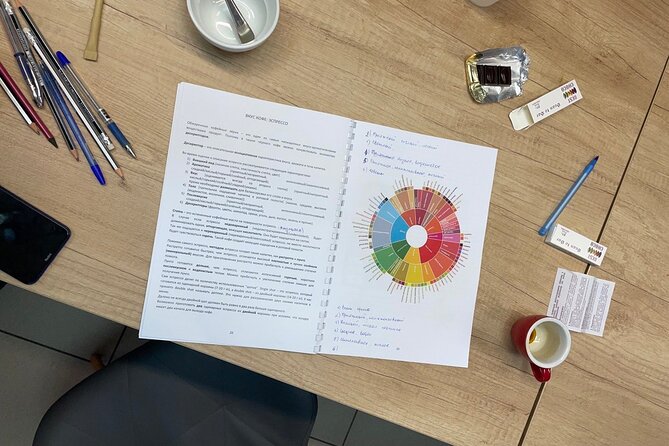
You start with the classics: espresso-based drinks you can recognize, then you learn the parts that actually control the cup. That includes learning how to evaluate coffee, and how different factors affect the flavor profile. The result is that you can taste, adjust, and improve later, even when the coffee changes.
If you are the type who knows the difference between good coffee and instant coffee but has never learned why, you will feel right at home. One review summed up the vibe well, long training, a lot of trying coffee, and a few eye-opening moments when the theory clicked with real hands-on practice.
Start at Dunajska c. 61, Then Settle Into a 10:00 am Skill Day
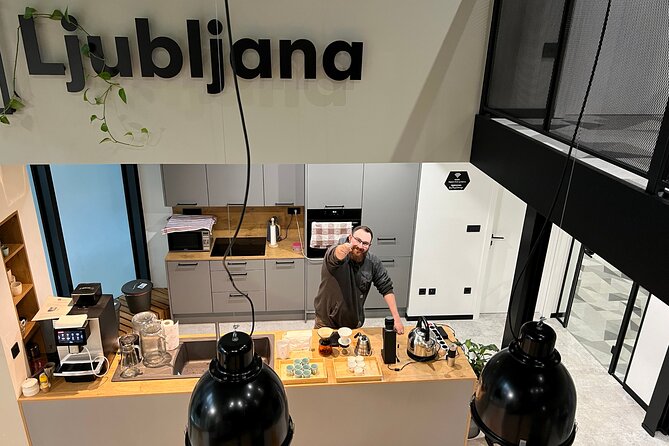
The course starts at 10:00 am at Dunajska c. 61, 1000 Ljubljana, and it ends back at the same meeting point. It also runs as a private tour/activity, meaning only your group participates, which usually makes it easier to ask questions and get personal feedback while you practice.
You will get a mobile ticket, and you should receive confirmation at the time of booking. The session is offered in English, so you can focus on the technique instead of decoding translation.
It helps to think of the day like training, not sightseeing. You are going to be tasting and making drinks, then tasting again. Showing up ready to stay engaged for several hours will make the whole experience feel worth it.
Espresso-Based Drinks, But With Flavor Evaluation Built In
Most people can pull an espresso once, maybe twice, and then hope for the best. This course aims to break that cycle.
You learn how to make classic espresso-based drinks and, just as importantly, how to evaluate them. That means you do not just learn what to do, you learn how to recognize what you are tasting. Reviews describe the training as extensive and motivating, with people leaving eager to try more coffees and brew better themselves.
This is where the course separates from casual coffee experiences. Espresso is sensitive. Small changes can shift balance, sweetness, bitterness, acidity, and overall clarity. Once you learn what affects the flavor profile, you start tasting like a brewer, not just a consumer.
Practical tip for you: during tasting, slow down. If you rush the cups, you miss the differences that the course is designed to teach you.
Equipment Basics and Maintenance Mindset That Saves You Later
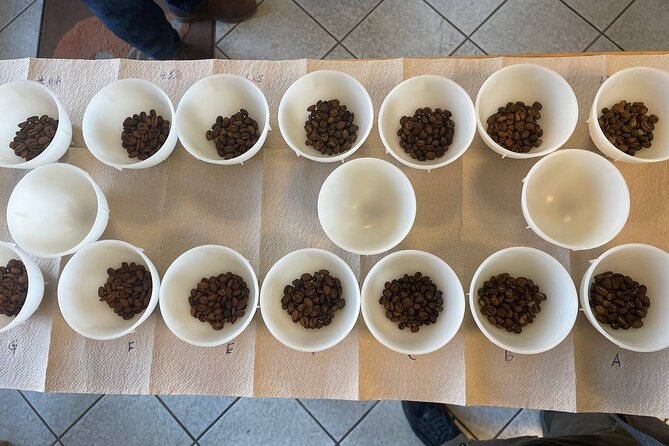
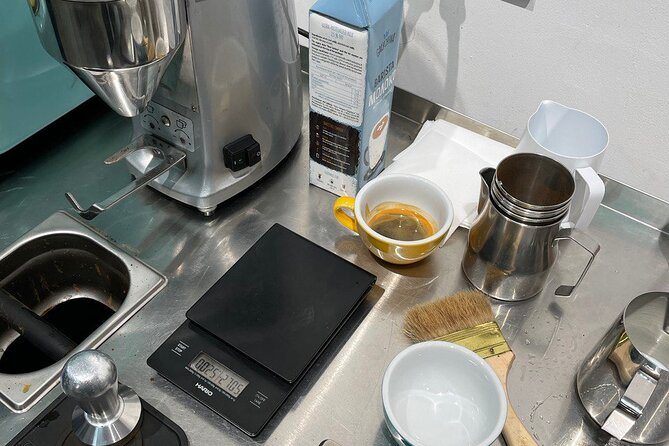
A big part of being good at coffee is understanding the tools. In this class, you learn how coffee equipment works and how it should be maintained.
This matters because the espresso machine and grinder are not background characters. They impact extraction, consistency, and even how stable the results feel throughout your session. When equipment is cared for properly, the coffee tends to behave more predictably. When it is not, you fight the machine instead of learning the craft.
In real terms, this training helps you avoid the common frustration of making what should be a good drink, then getting a confusing result again the next time. The equipment lesson gives you a better chance of diagnosing what changed.
I love that this course treats equipment as part of the skill, not as a magical black box.
Latte Art Practice: Pouring With Control, Not Just Hope

Latte art gets a reputation for being flashy. In this course, it is also a technique lesson.
You learn how to pour latte art and how to control the pour in the cup. That takes practice with the milk texture and your pour timing. And since you are working with real barista equipment, it is easier to feel what adjustments actually do.
One of the reviews called the day eye-opening, and that tends to happen when people realize how much micro-control the process requires. Latte art is not only about making a pattern. It is also about creating the right milk consistency to support that pattern.
If you are thinking, I just want the trick, keep this mindset: treat latte art as a repeatable exercise. The pattern is the proof, but the process is the real win.
Coffee Sourcing and Dialing In: Learn the Adjustments That Matter
A true barista skill is adapting when the coffee changes. This course trains you for that with lessons on how to source coffee and dial in the best coffees.
Dialing in is basically the art of adjusting your approach until the cup tastes right. Since the day includes tasting and flavor evaluation, you are not learning dialing in as vague advice. You learn it as something you can taste and measure with your palate.
This is exactly what you want if you buy coffee locally or experiment with different roasts. Instead of treating each bag as a gamble, you can treat it like data. The course nudges you toward that thinking.
And if you are not trying to become a barista, you still win. One review mentioned doing it partly because they were tired of generic coffee habits. The payoff was confidence and the ability to show off with better drinks, even on dates. That is a real, practical reason to book.
A 7-Hour Training Day That Feels Like Progress, Not Waiting
The duration is listed at 7 hours (approx.), which is long enough that you get more than one “taste and try” moment. The reviews repeatedly hint that the longer training is worth it because you actually learn, practice, and taste along the way.
The arc of the day makes sense: start with foundations, then move into equipment and espresso making, then add latte art, and finish with sourcing and dialing in. Along the way, you are tasting, adjusting, and getting feedback that helps you connect cause and effect.
One reviewer even joked about whether some of it was caffeine, which is a fair suspicion. But even without leaning on humor, the structure is designed to keep you actively involved. You are not standing around waiting for your turn.
What You Get During the Course, and What You Should Plan For
This workshop includes coffee and/or tea, bottled water, and snacks. Alcoholic beverages are not included, and lunch is not included.
That last part matters. If you have a low caffeine tolerance or you get hungry mid-morning, you will want to plan your meal timing around the day. Since you will be tasting a lot, eating too close to your first tasting can also affect how you perceive flavors. You do not need a gourmet plan, just a sensible one.
Also, because there is alcohol not included, this is a straightforward skills day. You can keep your attention on technique, not on anything else.
English Instruction and Adult Workshop Focus
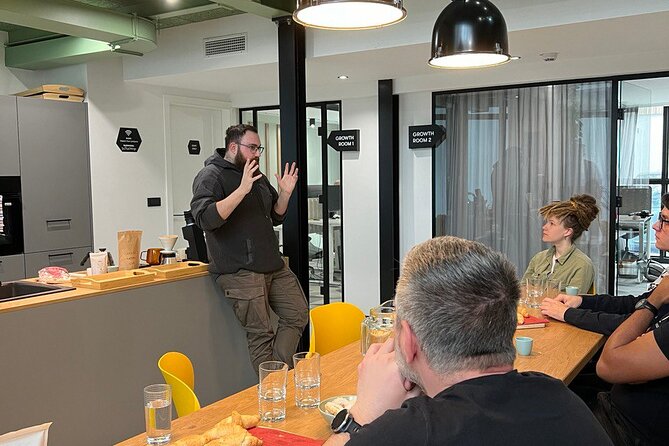
The experience is offered in English, and you are in a private setting with only your group participating. That combination is great if you want hands-on instruction without feeling like you are sharing attention with strangers.
There is no stated age limit for drinking coffee, but the workshop accepts people over 18 for coffee-related workshops. So if you are booking for someone younger, you should double-check fit with this age rule before planning.
From the reviews, the course hits the sweet spot for people who are curious and motivated, not only people who already know coffee. You do not have to be a professional barista to benefit.
Price and Value: Is $355.04 Fair for 7 Hours?
The price is $355.04 per person, for a course lasting about 7 hours. On paper, that sounds like a splurge, so let’s talk value in practical terms.
You are paying for a long session of hands-on training with professional-style equipment, plus tasting, plus instruction on espresso drinks, flavor evaluation, equipment function and maintenance, latte art, and dialing in. Many coffee experiences either focus on tasting, or focus on skills without the depth of evaluation. This course includes both, which is why the time cost makes sense.
You also get included refreshments: coffee or tea, bottled water, and snacks. That lowers your day-of out-of-pocket spending a bit, and it keeps you fueled for practice.
The private format can also increase value. Even if it is not a crowd, you get a better chance for feedback and questions while you are working.
My bottom line: if you like learning how things work and you want to improve beyond a basic brew, the price is easier to justify. If you only want a quick taste tour, you might not use the full skill time.
Who Should Book This Course, and Who Might Skip It
This is a strong choice for you if:
- You enjoy coffee and want to understand how flavor changes
- You want hands-on practice with real equipment
- You want to learn latte art with technique behind it
- You are curious but not necessarily pursuing a career
It might be less ideal if:
- You only want casual sipping with minimal instruction
- You hate long training days and do not want to plan around no lunch included
- You are looking for an experience centered on food or sightseeing rather than coffee skills
Based on the reviews, the course especially appeals to people who are tired of generic coffee and want to feel confident ordering or brewing better. Also, the name Lev appears in feedback, and that suggests the instructor role is part of what people remember, in a good way.
Should You Book This Barista Skills Foundation Course in Ljubljana?
Book it if you want a real skill day: espresso, tasting evaluation, equipment know-how, latte art, and dialing in. It is built for people who learn by doing, and it is long enough to make progress instead of just giving you a few tips.
Skip it if you want a short coffee stop, or if a 7-hour commitment feels like too much without lunch included. You do get snacks, but you still need to plan your own main meal timing.
If you are on the fence, here is your simple test: do you want to understand coffee, or just drink it? If it is understanding, this course is the kind of investment that pays off in your cup for a long time.
FAQ
How long is the Barista Skills Foundation Course in Ljubljana?
The course is listed as 7 hours (approx.).
What time does the course start?
It starts at 10:00 am.
Where does the experience meet and end?
The meeting point is Dunajska c. 61, 1000 Ljubljana, Slovenia, and the activity ends back at the meeting point.
Is the course offered in English?
Yes, it is offered in English.
What is included in the price?
It includes coffee and/or tea, bottled water, and snacks.
Is lunch included, and is alcohol served?
Lunch and alcoholic beverages are not included.
Every Slovenia Tour We Have Reviewed
Ljubljana Tours and Day Trips We Have Rated
Recently added to our Slovenia write-ups
- Woop! Fun park with 21 attractions
★ 4.6 · 3 reviews - Private Zagreb Tour from Ljubljana
★ 4.5 · 3 reviews - The Deadly Walk – Ljubljana Cemetery Tour
★ 5.0 · 3 reviews - Postojna Cave and Predjama Castle Tour from Ljubljana
★ 5.0 · 3 reviews - Postojna Caves and Predjama Castle. Private trip.
★ 4.5 · 3 reviews - Introduction to the Specialty Coffee world in Ljubljana
★ 5.0 · 3 reviews
Ljubljana Tours & Day Trips, side by side.
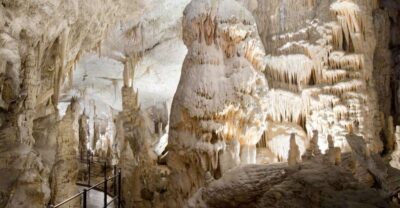 ★ 4.9Ljubljana: Postojna Cave & Predjama Castle Tickets and TourFrom $1152,146 reviews
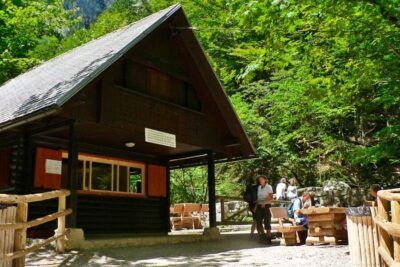 ★ 4.9Ljubljana: Savica Waterfall, Lake Bohinj, and Lake Bled TourFrom $941,015 reviews
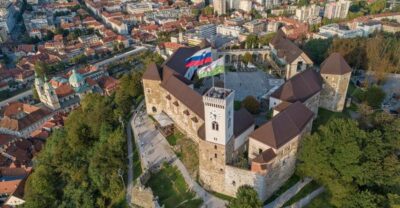 ★ 4.3Ljubljana: Castle Entry Ticket with Optional Funicular RideFrom $17718 reviews
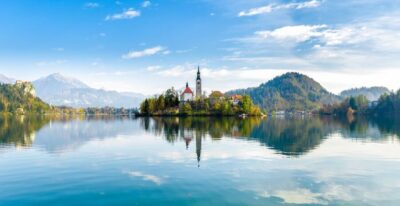 ★ 4.8From Ljubljana: Lake Bled & Postojna Cave with Entry TicketsFrom $173694 reviews
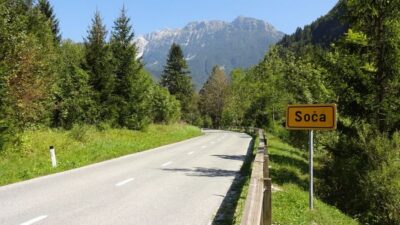 ★ 4.9From Ljubljana: Guided Day Tour to Soča and Kranjska GoraFrom $115584 reviews
 ★ 4.6Ljubljana: Guided Walk & Funicular Ride to Ljubljana CastleFrom $23576 reviews
 ★ 4.5House of Illusions Ljubljana Entrance TicketFrom $16556 reviews
 ★ 4.5Pub Crawl LjubljanaFrom $25536 reviews
Also filed under